The backstage of San Miguel’s creative scene. Cellos spin, insects get microscopes, fungi become architecture, and coral gets a second chance. It is less a studio and more a long conversation about how the world really works.


Walk down La Esperanza in Colonia San Antonio and you eventually reach a building that blends into the neighborhood. Inside, the atmosphere shifts. Taller30 runs on steady, ongoing dialogue between art, science, sound, and design. Six artists share the space, treating it less as a studio and more as a site for investigation.
The collective began with Taiyo Miyake, Arthur Henry Fork, and Leslie San Vicente. It is now shaped by the work of Marcela Armas, Daniela Edburg, Gilberto Esparza, Diego Liedo, Bruno Monsivais, and Iván Puig. Their practices span sound, sculpture, ecological studies, mechanical systems, fiber arts, speculative design, and interspecies communication. The combination creates a work environment where objects, tools, and materials are used to study how things operate rather than to produce spectacle.
Taller30 collaborates with researchers, educators, scientists, and local institutions throughout Mexico. Workshops, residencies, and listening sessions are part of their structure. They approach art as a way to question how knowledge is shared and how communities relate to the systems around them.
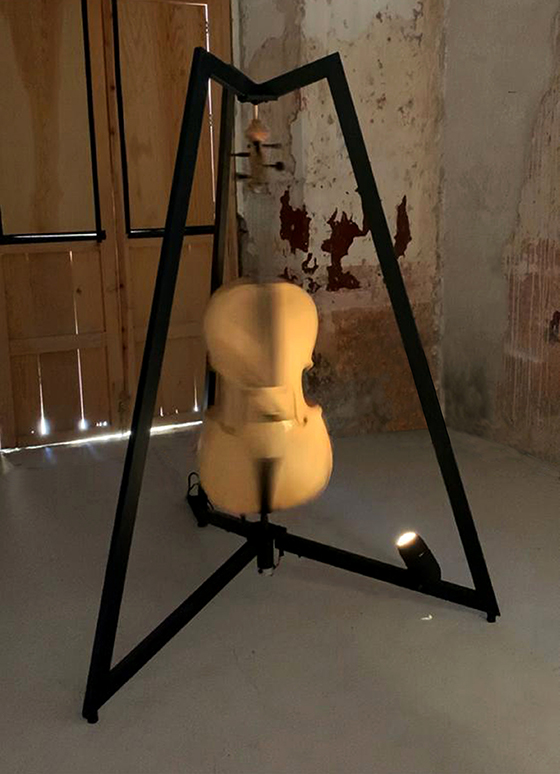
A mechanical structure rotates a cello until it functions as a drawing tool. The marks produced register movement and vibration, shifting how the viewer understands sound and form.
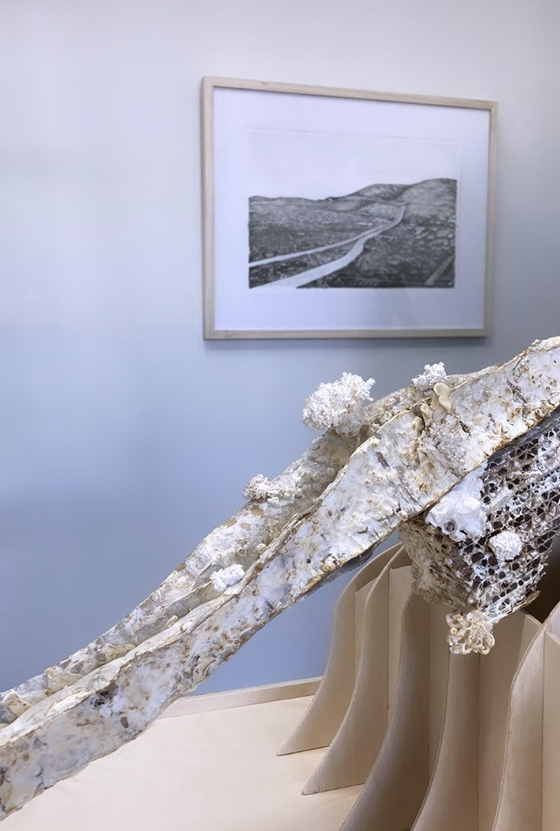
PSEA proposes a bridge made from mycelium to support insect movement disrupted by large road networks. Mycelium grows in dense underground structures, and the work examines how these natural formations could inform future materials or spatial solutions.

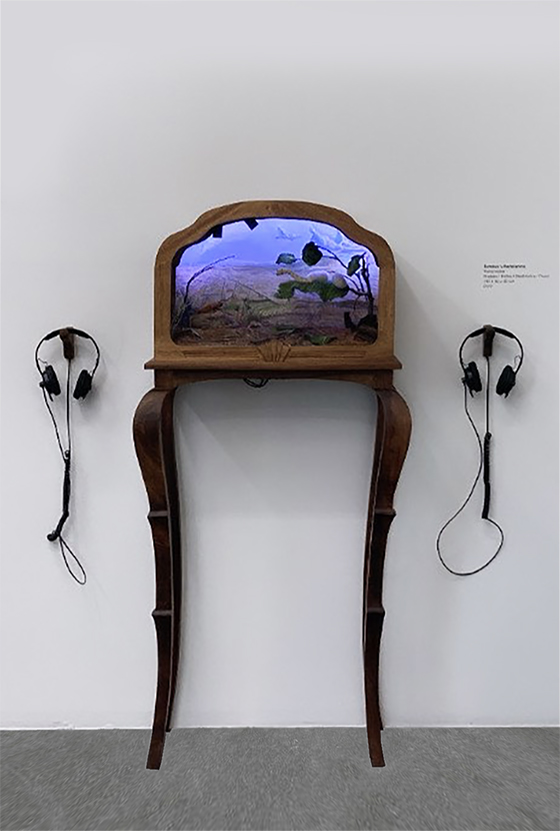
A silkworm and a cockroach share a controlled environment while their imagined dialogue is translated through an interspecies communication device. The project focuses on coexistence and on species that often go unnoticed.
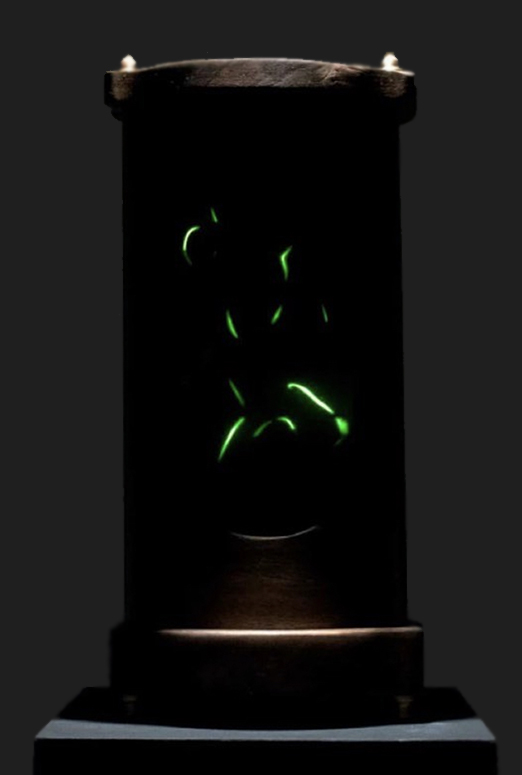
Electronic fireflies installed in a dimmed room recreate the light patterns of species no longer found in many regions due to environmental change.
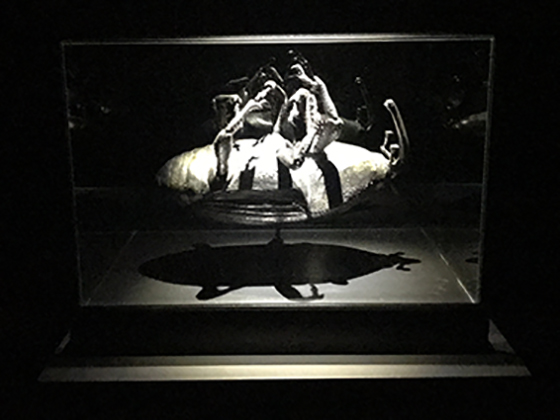
This series examines insect populations and the ecological consequences of their decline. The work encourages close observation rather than dramatic interpretation.
These works reflect T30’s broader interest in understanding systems, materials, and relationships that underpin everyday life.
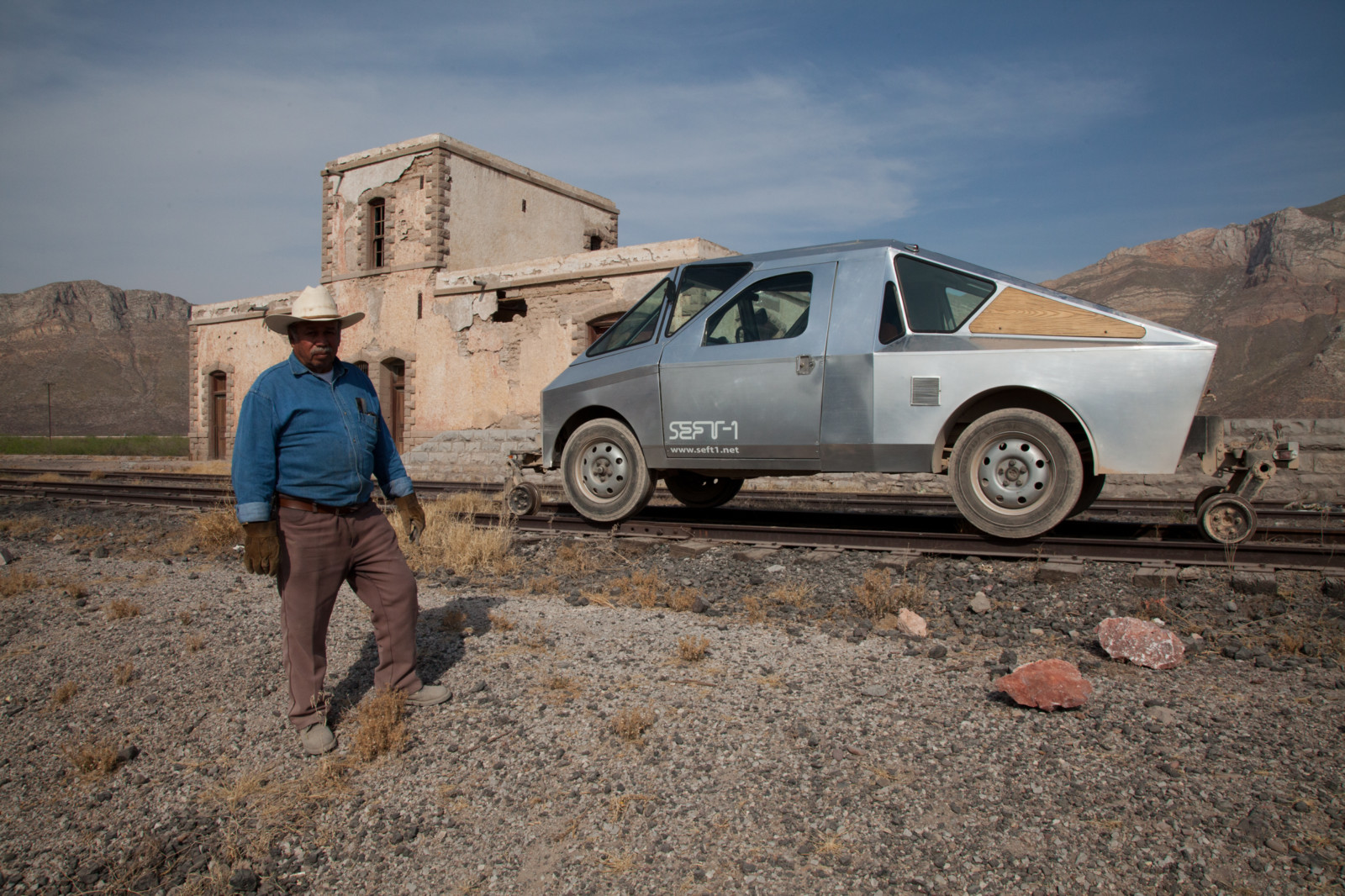
SEFT-1, the Sonda de Exploración Ferroviaria Tripulada, is an independent project by Iván Puig and Andrés Padilla Domene. The vehicle was built to travel on paved roads and abandoned railway lines. From 2010 to 2012, the artists used it to document regions shaped by the collapse of Mexico’s passenger rail system. They recorded infrastructure, landscapes, and the experiences of people who still live along the tracks.
The project was later shown at Furtherfield Gallery in London as part of The Arts Catalyst program curated by Rob LaFrenais. During that period, SEFT-1 received some unexpected online attention.
Iván recalls, “Grimes tweeted about the project when it was presented at Furtherfield. She shared several reactions and later deleted them.” He remembers it as an interesting timed detail, since soon after, her partner at the time, Elon Musk, revealed the Tesla Cybertruck to the world.
The story sits alongside the work as a small note about how projects can circulate in unpredictable ways.
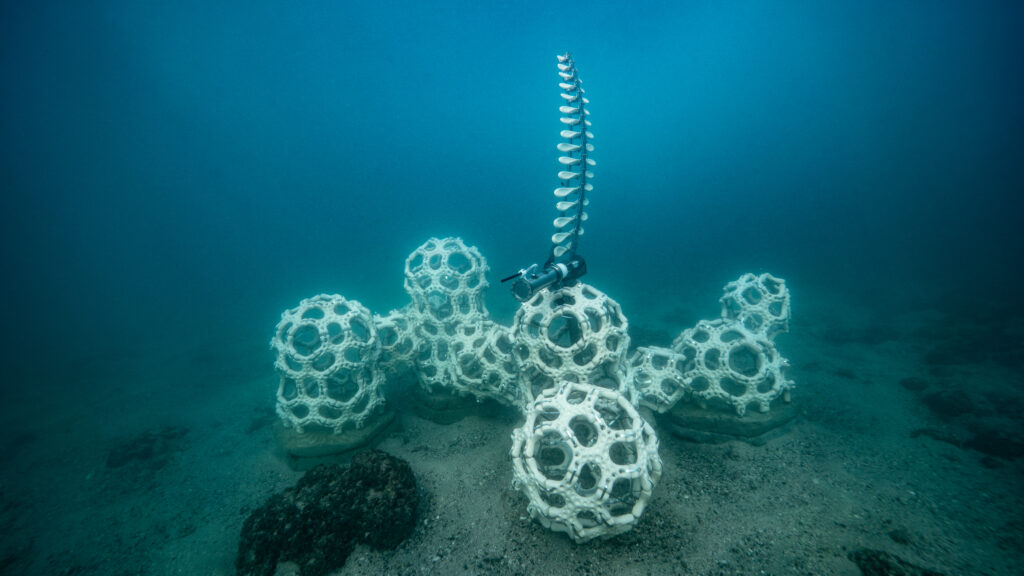
KORALLYSIS, developed by Gilberto Esparza, focuses on coral regeneration in the Mesoamerican Reef. Ceramic structures are placed underwater and connected to systems that use marine currents to generate an electric charge. Electrolysis produces mineral deposits that help coral fragments anchor and grow.
The project received an Honorary Mention at the S+T+ARTS Prize in 2024. It was presented at Science Gallery Monterrey in 2025 and later exhibited at the Museo Nacional de la Ballena in Mazatlán. The project describes itself as follows: “KORALLYSIS is based on the development of hybrid organisms between mechanical systems and coral colonies that coexist in a symbiotic relationship.”
The work remains grounded in scientific collaboration, field research, and long-term observation.
Taller30 hosts workshops and residencies that offer access to sound, technology, ecological study, and material research. These programs support the exchange of ideas within the Bajío region and connect local communities with broader creative practices.
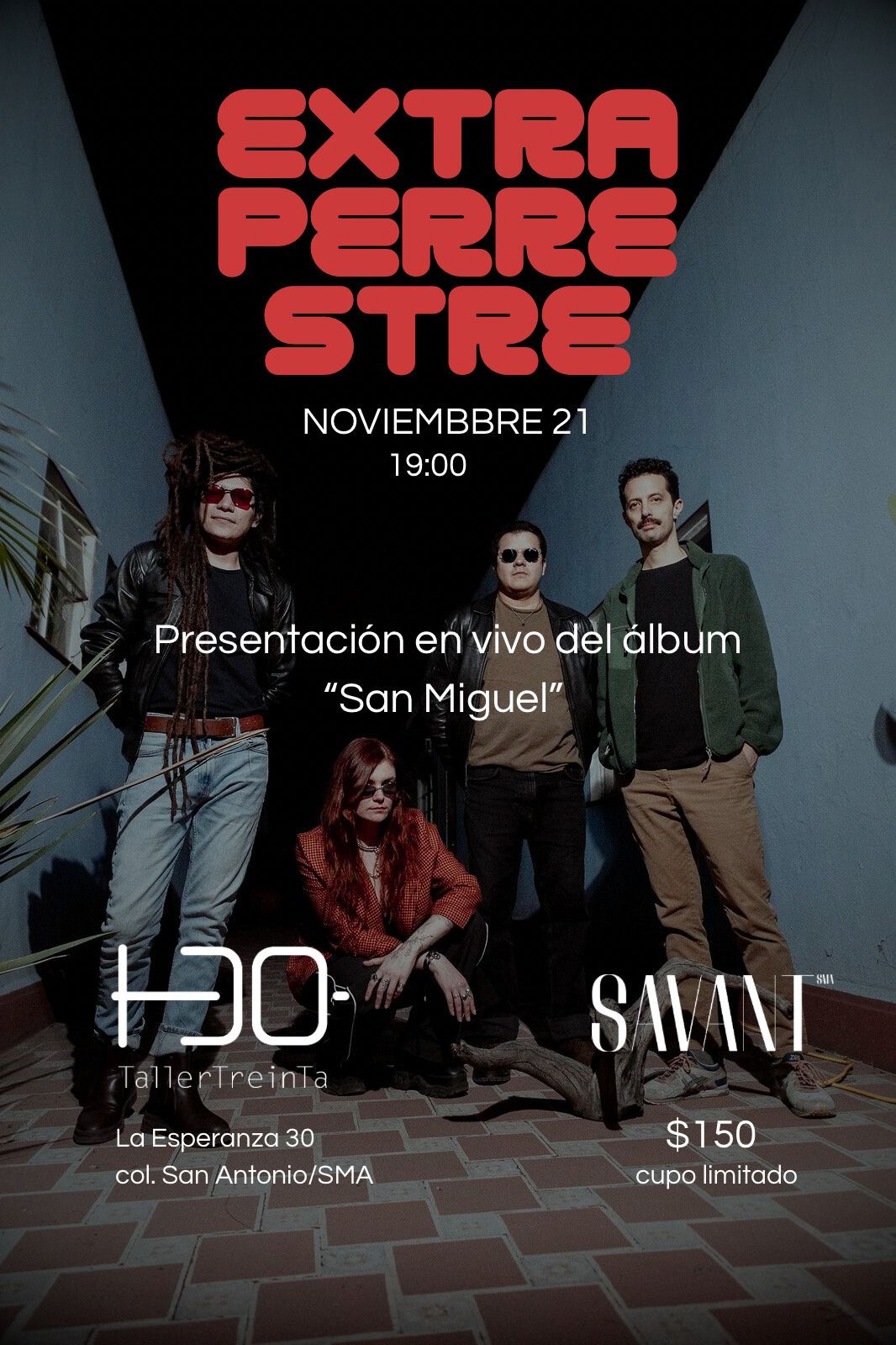
This weekend, Taller30 presents Extraperrestre with a live performance of their album San Miguel. The event takes place at 19:00 on November 21 at La Esperanza 30.
Taller30 does not frame itself through statements about innovation or artistic disruption. Instead, the studio focuses on steady work that examines how art intersects with science, technology, and the natural world. Inside the space, instruments, prototypes, samples, and materials form part of a continuous study of how environments function.
San Miguel’s creative landscape often shows its activity in public ways, but Taller30 demonstrates that significant work can also take shape quietly, through patient observation and long-term collaboration.

We're Savant, San Miguel de Allende’s new online lifestyle and culture magazine. Created for curious travelers, locals, and design and food lovers alike, Savant offers curated stories and an authentic look into the people, places, and passions that shape this iconic town. More than a publication, it’s a cultural community, and your invitation to experience San Miguel like never before.