Pedro Friedeberg turned imagination into architecture, furniture, and symbols that reshaped surrealist design. In San Miguel de Allende, his world still lives on.


San Miguel de Allende has always been shaped by the artists who chose to make it home.
This week, the town says goodbye to one of its most singular residents. Pedro Friedeberg passed away on March 5, 2026 at the age of 90, at his home in San Miguel de Allende, the city that became his refuge and creative base for decades.
With him goes one of the most eccentric and imaginative figures in modern Mexican art, a creator whose work blended architecture, symbolism, humor, and surreal fantasy into a visual universe entirely his own.
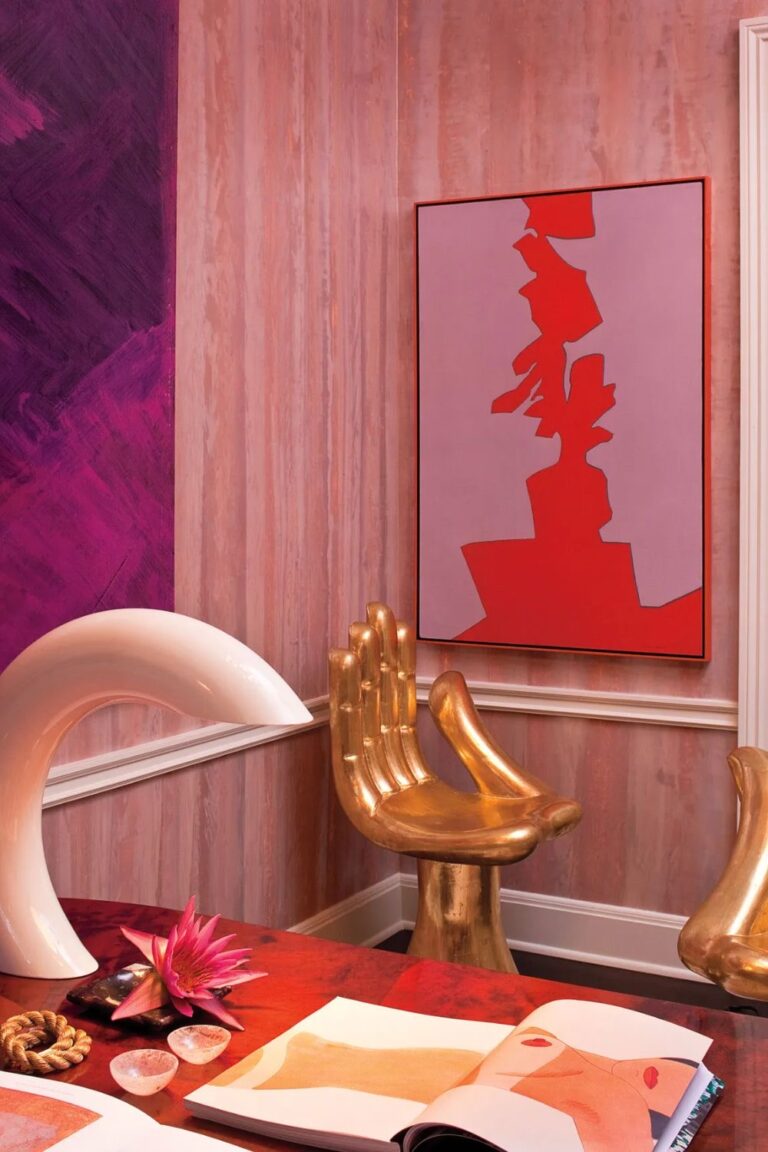
For many people around the world, Friedeberg is instantly recognizable through one object: the Hand Chair.
Designed in 1962, the sculptural seat transforms a human hand into a throne. The palm becomes the seat, while the fingers form the backrest and armrests. The original piece was carved from wood and covered in gold leaf, blurring the boundary between sculpture and furniture.

What began as a playful surrealist gesture became one of the most recognizable pieces of design of the twentieth century, reproduced thousands of times and appearing in museums, galleries, and homes around the world.
But Friedeberg’s imagination extended far beyond furniture.
His drawings were filled with labyrinths, temples, repeating symbols, and impossible architectural structures that seemed to map entire imaginary civilizations. Rather than follow the minimalist ideals that dominated modern design, he pursued ornament, complexity, and visual riddles.
In other words, he made art that refused to behave logically.
In San Miguel, Friedeberg’s legacy lives not only in galleries but inside the walls of a house.
His longtime residence eventually became Galería Casa Diana, a space that now holds one of the largest collections of his work. The building itself carries the artist’s imprint, designed and decorated with many of his own sculptural elements and decorative motifs.
Walking through the gallery feels less like visiting a conventional exhibition space and more like stepping inside the artist’s mind. Sculptural fireplaces, surreal reliefs, intricate drawings, and symbolic imagery appear throughout the rooms and courtyards.
The house operates both as a gallery and as a kind of living archive of Friedeberg’s imagination. Visitors can still experience the environment where he lived and created for years, surrounded by the same playful architectural language that defines his work.
Friedeberg’s influence in San Miguel extends beyond his home.
At the boutique hotel La Valise San Miguel de Allende, large surrealist wall reliefs created by the artist remain embedded throughout the building. Dragons, suns, and symbolic figures climb across the walls and staircases, transforming the architecture itself into part of his artistic universe.
And just above Parque Juárez, one of the most visible tributes to the artist quietly watches over the park.
A monumental version of the Hand Chair sits along the staircase that rises from the park toward the surrounding streets. For years it has been a favorite stop for photographs, a surreal monument hidden in plain sight. Children climb into its palm. Visitors pose with it. Many people sit there without realizing they are interacting with one of the most famous pieces of surrealist design ever created.
It is playful, slightly absurd, and unmistakably Friedeberg.
Though Friedeberg’s work appears in collections across the world, San Miguel remains one of the best places to encounter his imagination directly.
You can see it:
These places are not just exhibitions. They are fragments of the world he built.
Pedro Friedeberg once filled his drawings with endless staircases, impossible temples, and architectural labyrinths that seemed to stretch forever.
Now the artist himself is gone.
But in San Miguel, those labyrinths remain, quietly woven into the streets of the town he chose to call home.

We're Savant, San Miguel de Allende’s new online lifestyle and culture magazine. Created for curious travelers, locals, and design and food lovers alike, Savant offers curated stories and an authentic look into the people, places, and passions that shape this iconic town. More than a publication, it’s a cultural community, and your invitation to experience San Miguel like never before.